JS中的Event Loop
2024/4/4 | 字数检测:4457JS是单线程非阻塞语言,代码执行分同步和异步模式。异步模式通过宏任务、微任务队列及事件轮询机制进行管理和调度。文章详细介绍了宏任务(如setTimeout、I/O)和微任务(如Promise.then、process.nextTick)的类型,并阐述了事件轮询的执行顺序:先完成同步任务,接着执行当前宏任务下创建的所有微任务,然后进入下一个宏任务。文末提供了多个代码示例,深入演示JS事件轮询的实际执行机制。
嗯,一个相对复杂的问题。
众所周知,js 是一个单线程非阻塞的语言,我们需要使用一个两种模式来执行代码,分为同步模式(Synchronous)和异步模式(Asynchronous),异步模式中又有任务队列,任务队列分为宏任务和微任务,事件轮询也就是管理和调度异步任务,宏任务一般是 Node 和浏览器发起,微任务来自 JS 本身。
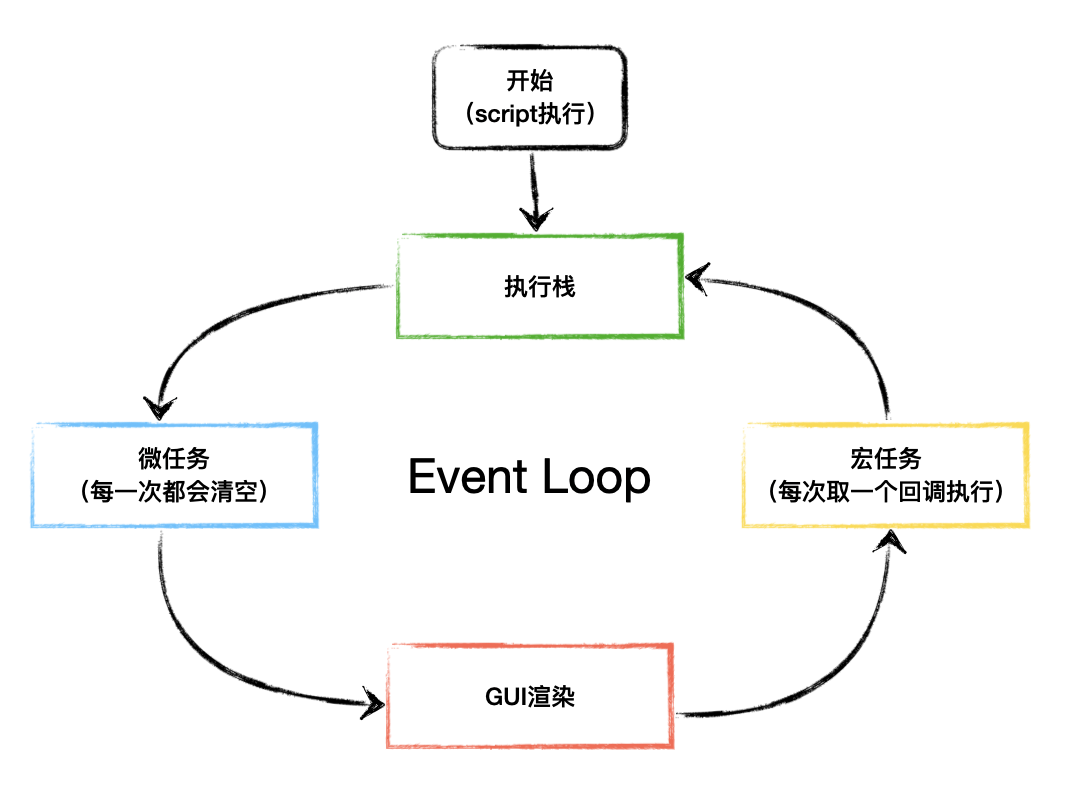
来看看宏任务和微任务都有哪些?
| 宏任务(Macrotask) | 微任务(Microtask) |
|---|---|
| setTimeout | requestAnimationFrame(有争议) |
| setInterval | MutationObserver(浏览器环境) |
| MessageChannel | Promise.[then/catch/finally] |
| I/O, 事件队列 | process.nextTick(node 环境) |
| setImmediate(node 环境) | queueMicrotask |
| script(整个执行文件) |
简而言之,就是当 JS 代码执行时,每次都会去领取一个宏任务开始,同步任务最先执行完,接着就是本次宏任务下创建的微任务全部执行完,如果是微任务里面又创建了微任务,也会添加到,在下次宏任务开始时,没有任何任务。
直接上题: (以下题目来自于:【前端体系】从一道面试题谈谈对 EventLoop 的理解)
console.log("script start");

setTimeout(() => {
  console.log("北歌");
}, 1 * 2000);

Promise.resolve()
  .then(function () {
    console.log("promise1");
  })
  .then(function () {
    console.log("promise2");
  });

async function foo() {
  await bar();
  console.log("async1 end");
}
foo();

async function errorFunc() {
  try {
    await Promise.reject("error!!!");
  } catch (e) {
    console.log(e);
  }
  console.log("async1");
  return Promise.resolve("async1 success");
}
errorFunc().then((res) => console.log(res));

function bar() {
  console.log("async2 end");
}

console.log("script end");
输出结果:script start、asyn2 end、promise1、async1 end、error!!!、async1、promise2、async1 success、北歌
console.log("1");

setTimeout(() => {
  console.log("2");
  Promise.resolve().then(() => {
    console.log("3");
  });
  new Promise((resolve) => {
    console.log("4");
    resolve();
  }).then(() => {
    console.log("5");
  });
});

Promise.reject().then(
  () => {
    console.log("13");
  },
  () => {
    console.log("12");
  }
);

new Promise((resolve) => {
  console.log("7");
  resolve();
}).then(() => {
  console.log("8");
});

setTimeout(() => {
  console.log("9");
  Promise.resolve().then(() => {
    console.log("10");
  });
  new Promise((resolve) => {
    console.log("11");
    resolve();
  }).then(() => {
    console.log("12");
  });
});
输出结果:1、7、12、8、2、4、3、5、9、11、10、12
new Promise((resolve, reject) => {
  console.log(1);
  resolve();
})
  .then(() => {
    console.log(2);
    new Promise((resolve, reject) => {
      console.log(3);
      setTimeout(() => {
        reject();
      }, 3 * 1000);
      resolve();
    })
      .then(() => {
        console.log(4);
        new Promise((resolve, reject) => {
          console.log(5);
          resolve();
        })
          .then(() => {
            console.log(7);
          })
          .then(() => {
            console.log(9);
          });
      })
      .then(() => {
        console.log(8);
      });
  })
  .then(() => {
    console.log(6);
  });
输出结果:1、2、3、4、5、6、7、8、9
中间还有两道题,先不做了,直接上最复杂的
async function async1() {
  console.log("async1 start");
  new Promise((resolve, reject) => {
    try {
      throw new Error("error1");
    } catch (e) {
      console.log(e);
    }
    setTimeout(() => {
      // 宏3
      resolve("promise4");
    }, 3 * 1000);
  })
    .then(
      (res) => {
        // 微3-1
        console.log(res);
      },
      (err) => {
        console.log(err);
      }
    )
    .finally((res) => {
      // 微3-2 // TODO注3
      console.log(res);
    });
  console.log(await async2()); // 微4-1  TODO-注1
  console.log("async1 end"); // 微4-2 // TODO-注2
}

function async2() {
  console.log("async2");
  return new Promise((resolve) => {
    setTimeout(() => {
      // 宏4
      resolve(2);
    }, 1 * 3000);
  });
}

console.log("script start");

setTimeout(() => {
  // 宏2
  console.log("setTimeout");
}, 0);

async1();

new Promise((resolve) => {
  console.log("promise1");
  resolve();
})
  .then(() => {
    // 微1-2
    console.log("promise2");
    return new Promise((resolve) => {
      resolve();
    }).then(() => {
      // 微1-3
      console.log("then 1-1");
    });
  })
  .then(() => {
    // 微1-4
    console.log("promise3");
  });

console.log("script end");
输出结果:script start、async1 start、error1、async2、promise1、script end、peomise2、then 1-1、promise3、settimeout、promise4、undefined、2、async1 end
结合这几个题的练习,对 JS 的事件轮询就差不多了,来挑战挑战